Visible or suspected growth
Discoloration or growth is present on building materials or inside an opened assembly.
Source-focused remediation for residential, commercial, multifamily, and restoration projects. Safe Abate controls the work area, removes affected materials, cleans remaining surfaces, and documents the completed scope.
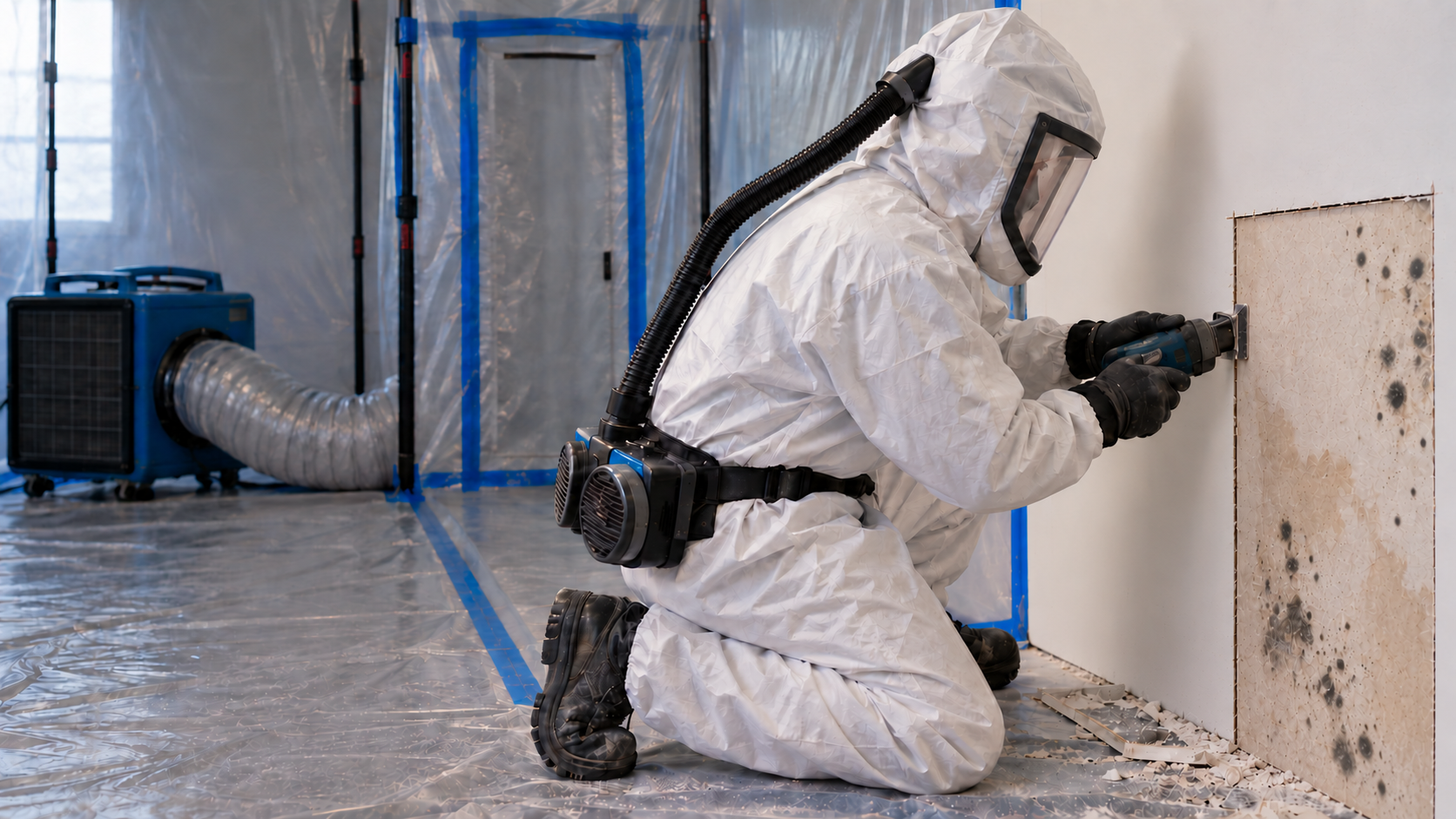
Mold growth is a moisture problem first. A dependable remediation plan identifies the affected area, considers the water source, and defines which materials can be cleaned and which need controlled removal.
Discoloration or growth is present on building materials or inside an opened assembly.
Drywall, insulation, flooring, or other porous materials remained wet or cannot be restored.
Musty odors or recurring moisture suggest impact inside walls, ceilings, crawlspaces, or attics.
Affected materials must be addressed before repair or reconstruction can move forward.
Source correction matters: Remediation cannot provide a lasting result if an active leak, condensation issue, or other moisture source continues.
The correct method depends on the material, the extent of impact, and the conditions around the work area. Porous materials often require removal, while sound structural surfaces may be cleaned using project-appropriate methods.
The final scope is based on accessible site conditions, affected materials, and the moisture history of the property.
Every project receives a defined scope that protects unaffected areas and keeps the work organized from initial evaluation through final handoff.
We review the moisture history, visible conditions, affected materials, access, and project goals.
Critical barriers, controlled entry, and air management are established around the work area.
Porous or unsalvageable materials are removed using controlled methods within the defined scope.
Remaining surfaces and the work area are detailed using HEPA vacuuming and appropriate cleaning methods.
Moisture conditions are reviewed so the area is ready for inspection, verification, or the next trade.
Project photos, scope information, and completion details are organized for owners and project partners.
Successful remediation requires more than removing visible growth. The work area must be controlled so affected dust and debris are not carried into clean portions of the property.
Polyethylene barriers and controlled entry help isolate the remediation area from occupied or unaffected spaces.
Project-appropriate air controls help manage particles and maintain directional airflow within containment.
Technicians use protective clothing, gloves, and respiratory protection suited to the conditions and work being performed.
Affected materials are handled carefully, and retained surfaces receive detailed HEPA cleaning before handoff.
Property owners, restoration teams, contractors, and property managers need a clear understanding of the completed remediation scope. We organize the project so the next decision is based on documented work—not guesswork.
Not every project requires sampling. When third-party assessment, post-remediation verification, or laboratory testing is part of the project, we coordinate the work area and documentation with that process.
Discuss Your ProjectWe mobilize for residential, commercial, multifamily, restoration, and larger mold-remediation projects throughout Washington.
These are the questions property owners and project teams commonly ask before remediation begins.
Remediation focuses on correcting the affected conditions, containing the work area, removing materials that cannot be cleaned, cleaning remaining surfaces, and documenting the completed scope. The goal is not to promise that every naturally occurring mold spore has been removed from the environment.
No. Paint should not be applied over active mold, and bleach is not a substitute for proper mold remediation. The moisture source must be corrected, contaminated material must be removed or properly cleaned, and all remaining surfaces must be thoroughly dried before painting. Porous materials that cannot be cleaned may require removal.
No. When visible mold is present and the affected area is clearly understood, laboratory testing is often unnecessary. Testing or an independent assessment may be useful when the source or extent is uncertain, hidden contamination is suspected, project documentation is required, or post-remediation verification is requested. There are currently no federal pass-or-fail limits for airborne mold concentrations.
Timing depends on the size and location of the affected area, materials involved, moisture conditions, access, drying needs, and whether third-party verification is part of the project. We provide a project-specific schedule after reviewing the property.
That depends on the location and scope of work, occupant sensitivities, and how the property can be separated from the controlled area. We explain work-area boundaries and access expectations before the project begins.
Mold can return when moisture returns. That is why source correction and drying are essential parts of a lasting solution. We identify visible moisture concerns and coordinate the remediation scope around corrected or controlled conditions.
Yes. Safe Abate coordinates with property owners, restoration contractors, property managers, and insurance-related project teams so the remediation scope supports the larger recovery plan.
Yes. Safe Abate is based in Yakima and serves residential, commercial, multifamily, and restoration projects throughout Washington State. Scheduling depends on location, project size, and urgency.
Tell us about the property and what you need. Our team will help you identify the right next step.